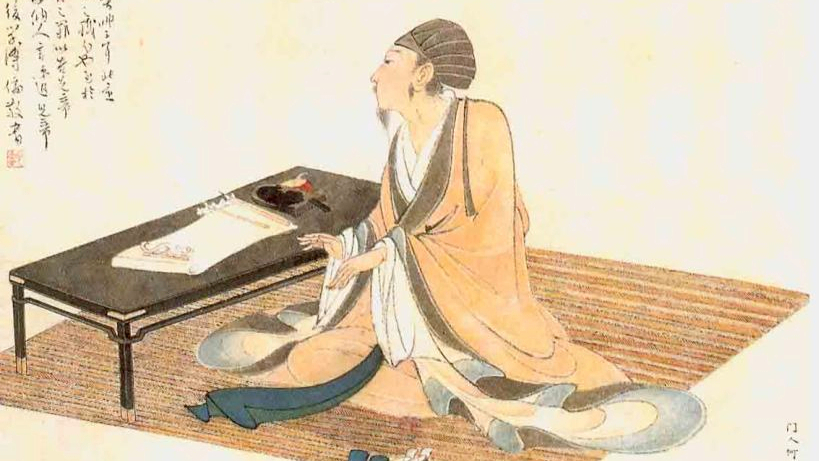
Zhuge Liang
Introduction
Zhuge Liang (181–234), courtesy name Kongming, was a renowned statesman, military strategist, and scholar during the late Eastern Han Dynasty (25-220) and the Three Kingdoms period in China. He served as the chancellor and regent of the state of Shu Han, founded by Liu Bei. Zhuge Liang is one of the most iconic figures of Chinese history and literature, often depicted as the epitome of wisdom and loyalty.
Early Life and Education
Zhuge Liang was born in Yangdu county, Langya commandery, which corresponds to present-day Yinan county, Shandong province. His father, Zhuge Gui, was an official who died when Zhuge Liang was young. As a result, Zhuge and his siblings were raised by their uncle. Zhuge Liang was known for his intelligence and was highly educated, familiar with Confucian classics, legalist doctrines, and military strategies.
Service to Liu Bei
Zhuge Liang's reputation for wisdom and strategy attracted the attention of Liu Bei, a relative of the Han imperial family and a prominent warlord. In 207, after being recommended by Xu Shu, another strategist, Liu Bei personally visited Zhuge Liang's hermitage three times to seek his counsel, an event that became legendary as the "Three Visits to the Thatched Cottage." Impressed by Liu Bei's sincerity, Zhuge Liang agreed to serve him.
Zhuge Liang quickly became Liu Bei's chief advisor and played a crucial role in the formation of the Shu Han state. His strategic acumen was evident in the Battle of Red Cliffs (208–209), where he formed an alliance with Sun Quan, the ruler of the Eastern Wu, to defeat the much larger forces of Cao Cao, the warlord controlling northern China.
As Chancellor of Shu Han
Following Liu Bei's death in 223, Zhuge Liang became the regent for Liu Bei's son, Liu Shan, effectively controlling the state of Shu Han. As chancellor, Zhuge Liang implemented numerous domestic reforms to strengthen the state's economy and military. He was known for his diligence and commitment to the state, often personally handling state affairs.
Zhuge Liang is famed for his Northern Expeditions, a series of military campaigns against the rival state of Cao Wei, aiming to fulfill Liu Bei's dying wish of restoring the Han Dynasty. Despite his brilliant tactics and innovations, including the famed "Empty Fort Strategy," the campaigns were ultimately unsuccessful due to logistical difficulties and his premature death from illness during the final expedition.
Legacy
Zhuge Liang's legacy as a wise and loyal strategist has been immortalized in Chinese folklore and popular culture, notably in the 14th-century historical novel "Romance of the Three Kingdoms" by Luo Guanzhong. The novel dramatizes Zhuge Liang's life and exploits, depicting him as a near-superhuman figure blessed with unmatched intelligence and foresight.
In addition to his military and political endeavors, Zhuge Liang was also an accomplished writer and inventor. He is credited with the invention of the wooden ox and flowing horse, mechanical devices used for military logistics, and the Zhuge crossbow, a rapid-fire crossbow. His essays on military strategy and governance have influenced Chinese culture for centuries.
Zhuge Liang is enshrined at various cultural sites across China, most notably at the Wuhou Shrine in Chengdu, Sichuan, which was built in his honor. His life and achievements continue to be celebrated in Chinese opera, literature, and adaptations, both in Asia and worldwide, representing an enduring symbol of wisdom, loyalty, and integrity.








